

CGMiner Overview
Optimized mining software for AMD GPU, FPGA, and ASIC devices. Supports multi-threaded mining for DOGE, BTC, and other cryptocurrencies. Download cgminer 3.7.2 for Windows or Linux today.
CGMiner
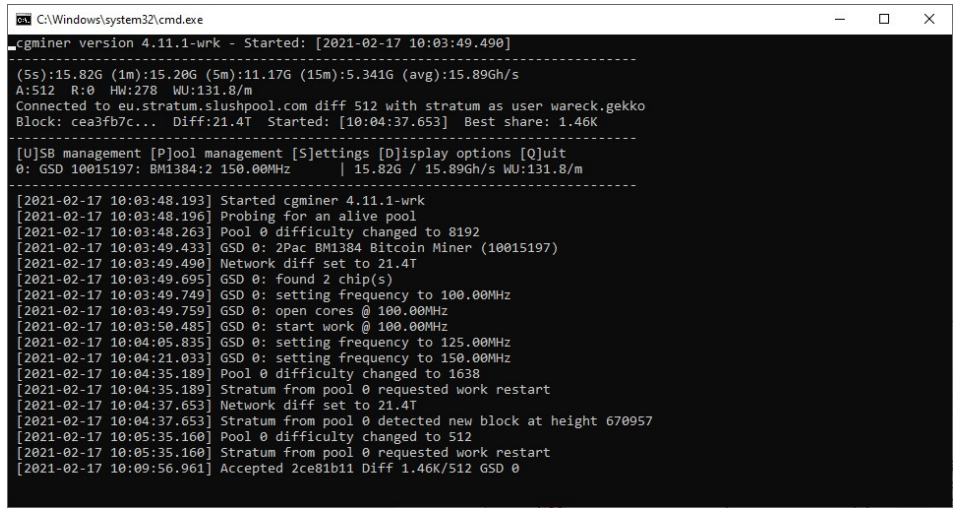
CGMiner is one of the best miners that allows mining Bitcoin, Litecoin, Dogecoin, and many other coins. The miner supports ASIC, FPGA, and GPU (up to version 3.7.2). CGMiner is flexible in its settings and supports multi-threaded mining, working with multiple pools, as well as remote management and monitoring of your mining equipment’s parameters.
CGMiner Algorithms and Fees Explained
| Algorithm | Supported Devices | Typical Pool Fee | Example Cryptocurrencies |
|---|---|---|---|
| SHA-256 | ASIC | 1% - 2% | Bitcoin (BTC), Bitcoin Cash (BCH) |
| Scrypt | ASIC, FPGA | 1% - 1.5% | Litecoin (LTC), Dogecoin (DOGE) |
| X11 | ASIC, FPGA | 2% - 2.5% | Dash (DASH) |
| Blake2b | ASIC | 1% - 1.5% | Siacoin (SC) |
| Equihash | ASIC | 1% - 2% | Zcash (ZEC), Horizen (ZEN) |
| Ethash | ASIC, FPGA | 0.5% - 1% | Ethereum Classic (ETC), Ethereum (ETH) |
| Groestl | ASIC | 1% - 1.5% | Groestlcoin (GRS) |
How to Install CGMiner
Installing CGMiner is straightforward. Follow these easy steps to get started.
- Download CGMiner: Grab the latest version of CGMiner for Windows or Linux from our official site.
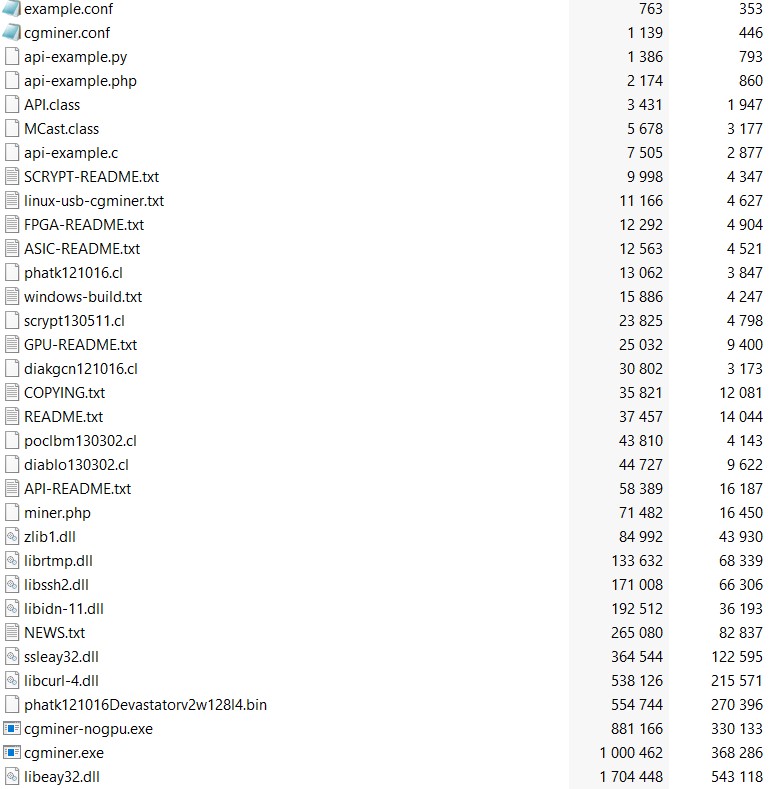
- Extract the ZIP file: Unpack CGMiner to a preferred location like your desktop.
- Modify the .bat file: Navigate to the CGMiner folder. Edit the relevant .bat file (e.g., btc.bat for Bitcoin) in Notepad, replacing placeholder details with your wallet and pool info.
- Launch CGMiner: Execute the edited .bat file to commence mining.
For detailed .bat file setup, refer to the instructions below or download a pre-configured file and simply update your wallet address.
Creating a .bat File for CGMiner
Here's a complete example of a .bat file setup suitable for any cryptocurrency:
Setting Up a .bat File for Bitcoin (BTC)
Parameter breakdown:
- cgminer.exe: The executable file. Leave as is.
- sha256: Specifies the mining algorithm.
- btc: Denotes the coin symbol.
- POOL_URL: Replace with your mining pool's address.
:PORT: the pool port (check on the pool’s page).- YOUR_BTC_WALLET: Insert your Bitcoin wallet address here.
- my_rig: Name your mining rig (worker).
- logs/miner.log: Directory for the miner's log file.
- pause: Included to show errors if issues arise.

cgminer.exe -o stratum+tcp://POOL_URL:PORT -u YOUR_BCH_WALLET -p x --log-file logs/miner.log
pause
Setting Up a .bat File for Litecoin (LTC)
Explanation of parameters:
cgminer.exe: the program for launching. Leave unchanged.- scrypt: The mining algorithm used.
- ltc: Coin symbol for Litecoin.
POOL_URL: the mining pool address (replace with your pool).:PORT: the pool port (check on the pool’s page).- YOUR_LTC_WALLET: Your Litecoin wallet address.
my_rig: the name of your mining rig (worker).logs/miner.log: the path to the miner log file.pause: added to display errors in case of problems.

cgminer.exe --scrypt -o stratum+tcp://POOL_URL:PORT -u YOUR_LTC_WALLET -p x --log-file logs/miner.log
pause
Setting Up a .bat File for Dogecoin (DOGE)
Explanation of parameters:
cgminer.exe: the program for launching. Leave unchanged.scrypt: the mining algorithm.- doge: Coin symbol for Dogecoin.
POOL_URL: the mining pool address (replace with your pool).:PORT: the pool port (check on the pool’s page).- YOUR_DOGE_WALLET: Your Dogecoin wallet address.
my_rig: the name of your mining rig (worker).logs/miner.log: the path to the miner log file.pause: added to display errors in case of problems.

cgminer.exe --scrypt -o stratum+tcp://POOL_URL:PORT -u YOUR_DOGE_WALLET -p x --log-file logs/miner.log
pause
Setting Up a .bat File for Namecoin (NMC)
Explanation of parameters:
cgminer.exe: the program for launching. Leave unchanged.sha256: the mining algorithm.- nmc: Coin symbol for Namecoin.
POOL_URL: the mining pool address (replace with your pool).:PORT: the pool port (check on the pool’s page).- YOUR_NMC_WALLET: Your Namecoin wallet address.
my_rig: the name of your mining rig (worker).logs/miner.log: the path to the miner log file.pause: added to display errors in case of problems.

cgminer.exe -o stratum+tcp://POOL_URL:PORT -u YOUR_NMC_WALLET -p x --log-file logs/miner.log
pause
Video Tutorial
Essential CGMiner Commands
| Command | Description | Example |
|---|---|---|
| --url | Specify the mining pool's URL. | cgminer --url stratum+tcp://pool.com:3333 |
| --userpass | Define the pool's username and password as `username:password`. | cgminer --userpass username:password |
| --quota | Allocate quotas to balance load between pools. | cgminer --quota "1;pool1.com" -u user1 --quota "2;pool2.com" |
| --api-listen | Activate remote API access for monitoring. | cgminer --api-listen |
| --gpu-engine | Adjust GPU clock speed in MHz for optimal performance. | cgminer --gpu-engine 1000 |
| --gpu-fan | Control GPU fan speed manually by setting a percentage. | cgminer --gpu-fan 75 |
| --temp-target | Define a desired GPU temperature for cooling efficiency. | cgminer --temp-target 70 |
| --config | Load mining settings from a specified configuration file. | cgminer --config configfile.json |
| --failover-only | Switch to backup pool only if the primary pool fails. | cgminer --failover-only |
| --gpu-memclock | Set the memory clock speed for GPUs in MHz. | cgminer --gpu-memclock 1500 |
| --log | Record mining activities in a log file for analysis. | cgminer --log log.txt |
| --scan-time | Specify the duration in seconds to search for pool work. | cgminer --scan-time 60 |
Selecting a Mining Pool
Steps to Select a Mining Pool:
- Select your cryptocurrency: Determine which coin to mine. For Bitcoin, choose pools with SHA-256 support.
- Find pools via specialized sites: Use aggregators like Mining Pool Stats, PoolWatch.io, or WhatToMine to locate reliable mining pools.
- Key factors to consider when choosing a pool:
- Pool fees: Typically range from 1% to 2%. Opt for reasonable rates.
- Server location: Closer servers reduce latency for better performance.
- Minimum payout: Ensure it aligns with your mining output.
- Pool popularity: Established pools like Slush Pool, F2Pool, AntPool, and BTC.com offer stability.
- Payment methods: PPLNS suits long-term miners, while PPS ensures consistent payouts.
Top Bitcoin Mining Pools:
- Slush Pool: A trusted Bitcoin mining pool with advanced monitoring tools.
- F2Pool: A major global pool known for low fees.
- AntPool: Supported by Bitmain, it mines various cryptocurrencies, including BTC.
Multi-Pool Strategy in CGMiner
CGMiner features multiple strategies for balancing load across pools to enhance performance:
- Failover: Automatically switches to a backup pool if the primary fails.
- Round Robin: Evenly rotates work among pools during idle times.
- Rotate: Alternates pools at predefined intervals.
- Load Balance: Distributes work based on assigned quotas.
- Balance: Shares work equally across all active pools.
Example of Load Balance Command:
cgminer --quota "1;pool1.com:3333" -u user1 -p pass1 --quota "2;pool2.com:4444" -u user2 -p pass2Use our quota calculator to refine your mining approach!
Pool Management API in CGMiner
CGMiner's robust API enables automated pool management and real-time performance tracking, ideal for remote control.
API Features Overview:
- Pool Management: Add or remove pools via API commands.
- Pool Switching: Automatically shifts to specified pools as configured.
- Quota Management: Allocates load quotas between pools.
- Pool Monitoring: Provides real-time pool status and performance data.
Example Command to Add a Pool:
{"command": "addpool", "parameter": "stratum+tcp://pool.com:3333"}Automate pool management with CGMiner's API for more efficient mining operations.